Feed · News

News

AI news for Operations leaders. Less hype. More decision impact.

Search…
Argentina-founded Moova expands its AI-driven logistics software ecosystemMedium
·2026-11-04

Argentina-founded Moova expands its AI-driven logistics software ecosystem

Moova, a logistics technology company founded in Argentina in 2018, is developing an AI-driven software ecosystem for logistics operations. The company describes AI-based routing and operational optimization alongside a newer MoovaTech positioning built around predictive intelligence and four platforms named Flow, Edge, Grip and Geo. Its corporate history also records the acquisition of Vonzu in April 2025, extending its transportation management and control tower capabilities in Europe. The precise launch dates and independently measured results of the newer AI platforms remain unverified.

The Dataleo angle

Moova illustrates a potential evolution from logistics execution services toward software-driven orchestration. The relevant question is how predictive models, routing optimization, transport management and real-time execution work together. Decision quality should be assessed using service levels, delivery costs, capacity utilization and exception-resolution performance. AI claims should be separated from conventional optimization, and operational teams must retain responsibility for constraints, overrides and delivery commitments.
Snowflake introduces Business Ontology to ground AI agents in approved enterprise definitionsHigh
·2026-11-03

Snowflake introduces Business Ontology to ground AI agents in approved enterprise definitions

At Snowflake Expedition 2026 on November 3, Snowflake announced Business Ontology and Cortex AI Gateway capabilities within its enterprise AI governance ecosystem. Business Ontology lets organizations define business concepts, relationships, metrics and accountable owners, linking approved definitions to underlying data assets. Cortex AI Gateway provides centralized controls over agent connections, model usage, security and spending. Business Ontology is not yet generally available, with a public preview planned.

The Dataleo angle

AI agents cannot make reliable supply chain decisions unless they share a governed interpretation of operational data. Concepts such as available inventory, constrained demand, forecast consumption or customer service may differ across ERP, APS and analytics platforms. Snowflake's approach addresses the semantic layer required before agents can safely reason across systems. The decision trade-off is between accelerating AI deployment and investing in business-definition governance. The failure mode is a technically capable agent producing a coherent recommendation based on inconsistent operational meanings.

Mecalux showcases Easy AI and warehouse AI agents at Retail Supply Chain & Logistics Expo 2026Medium
·2026-11-03

Mecalux showcases Easy AI and warehouse AI agents at Retail Supply Chain & Logistics Expo 2026

Mecalux will present its intralogistics portfolio at Retail Supply Chain & Logistics Expo 2026 (ExCeL London, November 11-12, booth R1151): AMRs, the 4-Way Pallet Shuttle, goods-to-person systems and Easy WMS. The company will also show Easy AI, which lets users query the WMS in natural language, and AI agents under development to analyze data, detect incidents and recommend warehouse optimizations. Mecalux is also working with MIT on AI, simulation and digital twins for warehouse design.

The Dataleo angle

WMS vendors are moving AI from a reporting add-on to agents that detect incidents and recommend operational changes. For operations leaders, the question becomes one of decision rights: what the agent may only recommend versus what it may execute, and whether its recommendations stay grounded in the warehouse's own data. Mecalux's configurable assistants suggest scoped autonomy rather than open-ended delegation.

SAP brings agentic AI to business networks for trading-partner collaborationMedium
·2026-11-03

SAP brings agentic AI to business networks for trading-partner collaboration

SAP's November 3 feature outlines how agentic AI on SAP Business Network could coordinate buyers, suppliers and other trading partners across sourcing, procurement, spending and risk workflows, extending AI beyond internal enterprise processes. The article sets out a network-wide direction rather than proving universal autonomous deployment.

The Dataleo angle

Cross-company agent collaboration shifts the boundary of decision accountability. A procurement or supplier-risk agent creates value only if both parties establish enforceable decision rights, escalation paths and traceability for actions across the network; otherwise faster coordination becomes an unowned inter-company decision.

SAP News Center
RELEX expands its agentic AI platform to coordinate planning and merchandising decisionsHigh
·2026-11-02

RELEX expands its agentic AI platform to coordinate planning and merchandising decisions

On November 2, RELEX Solutions announced new agentic operating capabilities supporting RELEX Open. The platform is designed to connect specialized AI, external applications and business knowledge across supply chain planning, merchandising and operations. Its architecture combines APIs, MCP connectivity, extensible applications and a shared knowledge graph to help agents coordinate recommendations across functions. RELEX also describes governance, explainability and human oversight as core design principles.

The Dataleo angle

The strategic shift is from optimizing individual planning decisions to orchestrating interdependent decisions. A demand forecast, pricing action or inventory allocation cannot be evaluated independently of commercial priorities and execution constraints. RELEX's knowledge-graph approach is relevant if it can preserve consistent business assumptions across specialized agents. The value test is whether orchestration produces better executable decisions, not simply more automation. Critical questions remain around conflicting objectives, decision rights, exception management and demonstrated operational outcomes.

MIT and Mecalux advance AI-powered warehouse slotting optimisationMedium
·2026-11-02

MIT and Mecalux advance AI-powered warehouse slotting optimisation

Researchers Selene Silvestri and Sarah Schaumann describe a joint MIT–Mecalux solution under development that combines operations research and machine learning to improve product placement. The approach uses order patterns and congestion constraints to determine where items should be stored and when they should move.

The Dataleo angle

The key decision is not simply where to place an SKU, but whether the expected picking benefit justifies relocating it. AI-driven slotting needs to account for congestion, relocation costs and volatile demand. A good optimisation on historical orders may become a poor operational decision during a demand shift.

FourKites and Chorus launch Store Marketing Intelligence for consumer brandsMedium
·2026-11-02

FourKites and Chorus launch Store Marketing Intelligence for consumer brands

On November 2, 2026, FourKites and Chorus launched Store Marketing Intelligence for CPG, food and beverage, and retail brands. The service tracks promotional displays at item level from manufacturing to the store, without retailer or store participation, and opens recovery tasks for displays at risk of missing the sales floor.

The Dataleo angle

Visibility creates value only when an actor is authorized to respond. Here the service goes beyond detection to coordinate the rescue of promotional displays without depending on store participation. The critical design choice shifts to intervention thresholds and the action rights granted to the service: overly permissive triggers can generate unnecessary recovery cost, while overly restrictive ones let a campaign expire.

FourKites (official press release)
Fujitsu, SoftBank Robotics and partners launch AI pilot to standardize packaging damage assessmentMedium
·2026-11-02

Fujitsu, SoftBank Robotics and partners launch AI pilot to standardize packaging damage assessment

On November 2, 2026, the Home Appliance Supply Chain Council, the Distribution Economics Institute of Japan, Fujitsu and SoftBank Robotics launched a Japan-based pilot backed by a Ministry of Land, Infrastructure, Transport and Tourism subsidy program. The partners will first standardize industry criteria for deciding whether appliances with damaged delivery packaging should be returned, then assess damage using Fujitsu Kozuchi Amalgamation AI for Vision and SoftBank Robotics' AI solution. The aim is to avoid unnecessary returns, improve logistics efficiency and lower environmental impact; operational results have not yet been demonstrated.

The Dataleo angle

The decisive innovation is an agreed industry rule for 'return or deliver', not the vision model. An automated damage score can be trusted only if manufacturers, retailers and carriers accept the same thresholds and escalation route. The unresolved failure mode is a conflict between AI assessment and the driver's judgment: who has authority to override the result, and who bears the cost of a wrong delivery or return?

Fujitsu newsroom
Otto Group and Sereact bring NVIDIA-powered physical AI to returns processingHigh
·2026-10-30

Otto Group and Sereact bring NVIDIA-powered physical AI to returns processing

On October 30, 2026, Otto Group and robotics software company Sereact announced a two-phase deployment of up to 25 AI-controlled dual-arm robots at an Otto Group logistics center in Poland, starting with ten systems, to grasp, identify, assess and sort returned items. The robots run on Cortex, Sereact's Physical AI model, trained and validated with NVIDIA Isaac Sim, Isaac Lab and Cosmos, which can handle items it has never encountered without product-specific teaching. Under a Robotics-as-a-Service model, Sereact operates and maintains the systems, while employees shift from repetitive grasping and lifting to supervision, exception handling and quality checks. These are the partners' stated plans and intended benefits, not independently verified results. Image disclosure: the illustration is a thematic Pexels stock photograph of an industrial robotic arm (photo 34194567), free license verified on the source page on October 31, 2026; it is not a photo of the Otto Group deployment.

The Dataleo angle

Returns processing is where automation promises the most and proves the least, because no catalog describes a crumpled, repackaged return. The operating model matters more than the robot count: Sereact keeps the system running under Robotics-as-a-Service, but Otto Group still owns the disposition decisions that carry margin and customer impact, such as grade, refurbish, restock or liquidate. Dataleo's read: the partnership explicitly keeps exception handling and quality checks with employees, which is the right boundary as long as it is contractual and not incidental. The open question for phase two is who is accountable when the model's assessment of a returned item is wrong, and who can override it in the flow.

Otto Group official newsroom, October 30, 2026.
Walmart and Symbotic expand warehouse automation agreement across 25 U.S. distribution centersHigh
Warehouse Robotics, Regional Distribution Centers, Inventory Planning, Slotting and Decision Accountability·2026-10-29

Walmart and Symbotic expand warehouse automation agreement across 25 U.S. distribution centers

On October 29, 2026, Symbotic and Walmart announced an expanded commercial agreement to bring additional automation capabilities to 25 U.S. regional distribution centers and support further opportunities across Walmart's global supply chain. The agreement builds on more than a decade of collaboration and includes an initial commitment of approximately $6 billion in spending over several years and multiple sites, according to Symbotic's official release. Symbotic describes its technology as an AI-enabled robotics and software platform for warehouse operations. The companies say the expansion will support greater storage capacity, upstream inventory management for e-commerce and more reliable replenishment, but these are intended benefits rather than independently verified results from the new agreement. Dataleo's focus is the distribution operating model: as software increasingly orchestrates work, Walmart and Symbotic must clarify who owns decisions on planning, slotting, sequencing and operational exceptions when capacity or service priorities conflict. Image disclosure: the featured image is a thematic Pexels stock illustration of an automated warehouse robotic system with blue crates (photo 36522028), not a Symbotic or Walmart installation.

The Dataleo angle

A partnership extending over a decade and now expanding automation to 25 U.S. regional distribution centers, with approximately $6 billion of initially committed spending reported by the companies, is an operating-model decision rather than a pilot demonstration. The affected decisions include inventory placement, warehouse work sequencing, throughput priorities and responses to exceptions. Value depends on whether Walmart's planners and site teams can translate changing demand, stock and service commitments into constraints that Symbotic's automated execution layer can act on reliably. The key trade-off is system-level efficiency versus local flexibility when real orders, equipment or labor availability depart from plan. The failure mode is to let software sequence work while leaving unclear who can override it, approve exceptions and answer for missed commitments. The announcement does not disclose the detailed decision-rights model or independently establish future performance improvements; the financial commitment and anticipated benefits are company statements.

Symbotic official press release
Sphera connects external supply chain risk signals to operational decisions with new AI capabilitiesHigh
·2026-10-28

Sphera connects external supply chain risk signals to operational decisions with new AI capabilities

On October 28, 2026, Sphera announced new AI capabilities for Supply Chain Risk Management that connect external risk signals, such as a supplier failure, a port closure or a material shortage, to the specific suppliers, products and operations they threaten, with the stated goal of helping teams assess impact and decide in minutes rather than days. The launch is backed by Sphera research across five markets (United States, United Kingdom, Germany, France and the United Arab Emirates): 58 percent of COOs surveyed say their most significant disruptions originated at least as much outside their organization as within it, rising to 71 percent in the UAE. These are the vendor's announced capabilities and self-commissioned research findings, not independently verified performance results. Image disclosure: the illustration is a thematic Pexels stock photograph of a container ship and cargo port under a cloudy sky (photo 36652835), free license verified on the source page on November 1, 2026.

The Dataleo angle

The hard part of disruption response is not seeing the storm; it is deciding what it means for this product, this site, this customer promise, before the window closes. Sphera's pitch targets exactly that decision latency, and the research figure that matters is the 58 percent: most damage now originates outside the walls a company controls, so internal data alone cannot scope a response. Dataleo's read: a tool that maps external signals to exposed operations changes who can decide and how fast, but it does not decide the tradeoff itself, such as rerouting supply versus breaking a customer commitment. The accountability question stays intact: when an AI-scoped impact assessment is wrong, whoever acted on it still owns the consequence.

Sphera official news release, October 28, 2026.
Oracle introduces Claw-powered agentic applications for supply chain planning and executionHigh
Agentic Supply Chain Planning and ERP Execution·2026-10-27

Oracle introduces Claw-powered agentic applications for supply chain planning and execution

On October 26, 2026, at Oracle AI World in Las Vegas, Oracle announced Claw-powered Fusion Agentic Applications for supply chain operations. According to the official Oracle Newsroom release, the launch introduces three applications designed to support operational decisions across planning, logistics and procurement.

Supply Planning Allocation evaluates competing demands for scarce materials and production capacity. Shipment Load Planning compares consolidation and transportation alternatives against cost, capacity and service constraints. Procurement Spend identifies potential contract leakage and off-contract spending and proposes corrective actions.

Oracle describes Fusion Claw as a governed agentic execution runtime embedded in Oracle Fusion Cloud Applications. According to S.Y. Shenoy, Senior Vice President of Applications Development at Oracle, the approach is intended to allow agents to reason, compute, adapt and execute specialized work within established permissions. The announced applications are designed to evaluate options and trade-offs and carry approved actions into execution.

This is a vendor product-launch announcement, not independently verified evidence of improved planning accuracy, logistics efficiency, procurement compliance or financial performance. The accompanying photograph is a thematic Pexels stock illustration, not Oracle imagery or a depiction of its software or customer deployments.

The Dataleo angle

The architectural shift is from AI systems that generate recommendations toward agents capable of executing approved actions inside ERP and SCM workflows. For supply planning, the critical decision is how scarce materials and production capacity are allocated when manufacturing priorities, customer commitments and margin objectives conflict. The potential value lies in connecting scenario evaluation with executable transactions under explicit business rules and decision rights. However, permission controls do not establish that an allocation is commercially or operationally correct. An agent can execute a technically valid transaction that reflects the wrong business priority. Value therefore depends on reliable constraints, transparent trade-offs, current operational data and clear accountability for prioritization decisions. Oracle's announcement establishes a product direction, not measured proof that these decision risks have been resolved.

Oracle Newsroom
C.H. Robinson extends Lean AI agents to ocean freight, air cargo and customs brokerageHigh
Agentic AI, Ocean and Air Freight Quoting, Ocean Booking and Customs Brokerage·2026-10-26

C.H. Robinson extends Lean AI agents to ocean freight, air cargo and customs brokerage

On October 26, 2026, C.H. Robinson announced that its Lean AI agents are extending into global freight forwarding, covering ocean and air freight quotes, ocean booking requests and U.S. customs brokerage workflows. The company reports more than 80,000 AI-generated price quotes for over 3,600 customers, with air quotes that previously took a day and ocean quotes that took two to three days now taking two to three minutes. AI agents have also begun handling thousands of ocean booking requests received each week and assisting with customs documents and compliance processes complicated by evolving tariffs and trade requirements. Mike Short, President of Global Forwarding, said: "As we've brought our AI playbook to global forwarding, the benefits keep compounding." These scale and cycle-time figures are company-reported claims, not independently audited results. The featured image is a thematic Pexels stock illustration of a cargo ship (photo 1554646), not an image supplied by C.H. Robinson or documentation of its AI system.

The Dataleo angle

C.H. Robinson's announcement matters because it reports production-scale operational outcomes rather than an isolated AI demo: more than 80,000 quotes across over 3,600 customers and a reported reduction in quote turnaround from days to minutes. The affected decisions are rate and routing proposals, ocean booking handling and preparation of customs files. Value depends on agents applying current charges, shipment constraints and customer-specific requirements reliably enough to produce executable commitments. The principal failure mode is an apparently fast automated quote or booking that misstates a fee, route, capacity assumption or compliance requirement. The unresolved governance question is which pricing, booking and regulatory exceptions remain under human authority as routine forwarding work becomes increasingly autonomous. All reported volumes and improvements are C.H. Robinson's own claims, not independently verified performance measurements.

C.H. Robinson official press release
ARIS launches Process Context for Enterprise AI to ground agents in operational workflowsMedium
Enterprise AI Agents and Supply Chain Process Intelligence·2026-10-24

ARIS launches Process Context for Enterprise AI to ground agents in operational workflows

On October 24, 2026, Supply & Demand Chain Executive reported that ARIS had launched Process Context for Enterprise AI, a capability intended to connect enterprise AI agents with business processes, operational execution data, responsibilities and controls. ARIS describes the offering as a foundation for enterprise agents built around its Digital Twin of the Organization.

The announced capabilities include object-centric process mining to connect process models with execution evidence, Process Lens to identify potential AI opportunities, and Model Context Protocol (MCP) access to information about processes, roles, systems, rules, risks and controls. ARIS says these capabilities can help organizations identify and deploy enterprise AI use cases more effectively.

For supply chain operations, the potential relevance lies in helping AI agents interpret the actual workflows behind purchasing, replenishment, inventory exceptions and operational approvals. However, the announcement does not establish that these capabilities have improved customer planning decisions, implementation speed or operational performance. The main risk is giving agents access to process descriptions that are outdated, incomplete or inconsistent with how work actually happens.

The accompanying image is a thematic Pexels stock illustration of a digital network. It does not depict ARIS software, a customer deployment or an actual operational digital twin.

The Dataleo angle

Process context matters for supply chain AI only when it improves the transition from an agent's recommendation to an authorized, executable operational decision. A purchasing or replenishment agent must understand which system owns the transaction, which business rules constrain it, who can approve exceptions and whether the recorded workflow matches current practice. ARIS's approach could help connect process definitions with execution evidence, making these dependencies more visible to agents. The condition for value is that process models remain synchronized with operational reality and that action permissions reflect actual decision rights. The principal failure mode is providing AI agents with a sophisticated but obsolete representation of the organization, allowing apparently well-grounded recommendations to follow incorrect procedures or bypass necessary approvals. The launch signals a potential decision-enabling infrastructure layer, not proven improvement in supply chain performance.

Supply & Demand Chain Executive - Marina Mayer
TraceLink launches Track & Trace Lakehouse to connect serialized supply chain events with compliance decisionsMedium
Life Sciences Traceability, Compliance and Decision Intelligence·2026-10-23

TraceLink launches Track & Trace Lakehouse to connect serialized supply chain events with compliance decisions

On October 23, 2026, TraceLink announced the launch of Track & Trace Lakehouse, a solution designed to provide SQL-based analytical access to serialized product events across life-sciences supply chains.

The product aims to make traceability data more accessible for compliance analysis, investigation of operational exceptions and the development of governed agentic workflows. By enabling analysis of product-level events, TraceLink intends to help organizations connect supply chain traceability information with operational and regulatory processes.

The announcement describes a product capability and intended use cases, not independently verified customer outcomes. It does not establish measured improvements in inventory accuracy, exception resolution time, compliance performance or operational efficiency.

The Dataleo angle

The significant change is not simply that serialized events become easier to query through SQL. The real decision opportunity is to turn traceability evidence into a verified operational response, such as investigating an inventory discrepancy, resolving a product-status exception or determining whether a compliance action is justified. Value depends on connecting event data with the relevant business context, applying appropriate validation rules and identifying who has authority to act. The main failure mode is treating analytical access as decision readiness: a queryable event record may be incomplete, delayed or insufficient to authorize an inventory adjustment or regulatory action. Governed AI agents could accelerate investigation, but their recommendations must remain distinguishable from validated facts and authorized transactions. TraceLink's launch establishes a potential enabling layer, not evidence that customers have achieved these outcomes.

PR Newswire - TraceLink
Runnings selects RELEX to unify forecasting, replenishment and retail planningMedium
Retail Forecasting and Replenishment·2026-10-23

Runnings selects RELEX to unify forecasting, replenishment and retail planning

On October 23, 2026, RELEX Solutions announced that Runnings, a US farm, home and outdoor retailer operating 90 stores across 12 states, selected its platform for forecasting and replenishment across stores and distribution centres.

The initial scope focuses on improving coordination between demand forecasts, inventory requirements and replenishment decisions across Runnings' retail and distribution network. The retailer plans to expand its use of RELEX into pricing, promotions, assortment and space planning at a later stage.

The announcement signals an intention to connect supply chain planning more closely with merchandising and commercial decisions. However, it describes a vendor selection and future implementation plans, not a completed transformation. No independently verified improvements in forecast accuracy, inventory performance, product availability or financial results have been established.

The Dataleo angle

The important question is not whether Runnings can consolidate more planning functions within RELEX, but whether those functions will produce consistent operational decisions. Forecasts and replenishment recommendations need to reflect merchandising priorities, promotional assumptions, assortment changes and store-level space constraints. The potential value is a shared planning process in which commercial decisions translate into executable inventory and replenishment commitments. The main failure mode is deploying an integrated platform while different functions continue to operate on conflicting assumptions or objectives. Selecting RELEX establishes the technology direction, not evidence that these decision trade-offs have been resolved or that performance has improved.

PR Newswire - RELEX Solutions
Almeera selects RELEX to unify forecasting, replenishment and space planning across QatarMedium
Retail Forecasting, Replenishment and Space Planning·2026-10-22

Almeera selects RELEX to unify forecasting, replenishment and space planning across Qatar

On October 22, 2026, RELEX Solutions announced that almeera, a Qatar-based retailer operating more than 65 stores, selected its unified planning platform to support forecasting, replenishment and space planning across its store network.

The initiative brings together demand forecasting, inventory replenishment and shelf-space planning, with implementation support from Demandtex and OSP. The intended approach is to improve coordination between product availability, inventory requirements and the allocation of retail space.

The announcement describes a technology selection and planned implementation, not completed deployment or independently verified operational results. No measured improvements in forecast accuracy, product availability, inventory performance or store productivity have been established.

The Dataleo angle

The important question is whether connecting forecasting, replenishment and shelf-space planning will improve the decisions made across almeera's store network, rather than merely consolidating applications. Inventory recommendations need to reflect shelf capacity, assortment priorities and demand variability, while space allocation decisions must account for replenishment feasibility and service expectations. The potential value lies in using consistent assumptions to resolve the trade-offs between availability, inventory investment and productive retail space. The main failure mode is implementing an integrated planning platform while commercial and supply chain teams continue to optimize separate objectives. Selecting RELEX establishes a technology direction; it does not yet demonstrate that these decisions have been integrated or that operational performance has improved.

RELEX Solutions
Primark selects Kallikor to simulate supply chain decisions before capital investmentHigh
Supply Chain Decision Intelligence·2026-10-22

Primark selects Kallikor to simulate supply chain decisions before capital investment

Primark has selected Kallikor to introduce simulation-led supply chain decision-making, beginning with digital twins of its distribution centres. Using Primark operational data, the models are intended to let teams compare changes to layouts, operating flows and potentially wider network configurations across cost, service, capacity and risk before committing capital. The announcement establishes a new decision-support initiative, not evidence of measured operational improvements.

The Dataleo angle

The value of Primark's initiative is not the digital twin itself. It is the possibility of comparing operational consequences before capital is committed. A simulation becomes decision intelligence only when competing scenarios reflect credible constraints, expose cost-service-capacity-risk trade-offs and inform a decision owned by accountable humans. Model validation against observed operations, fresh data, controlled scenario assumptions, scenario governance and explicit decision rights are essential conditions for trust. The principal failure mode is false confidence: a detailed simulation can produce precise-looking recommendations while missing actual labour variability, operating constraints or network interactions. Primark's reported initiative demonstrates an intended decision-support capability, not yet proven operational performance. Simulated evidence should guide investment choices, while measured results after implementation must establish whether the selected scenario delivered its expected value.

Logistics Manager
Blue Ridge launches AI-native planning platform built on DatabricksHigh
Supply Chain AI·2026-10-21

Blue Ridge launches AI-native planning platform built on Databricks

On 21 October 2026, Blue Ridge Global launched an AI-native Supply Chain planning platform built on Databricks for distributors, manufacturers and retailers. It combines demand forecasting, replenishment and inventory optimization, with Adaptive ML explaining forecast drivers and agentic AI designed to automate repetitive tasks with traceable actions. The platform aims to align finance, operations and planning around shared data while leaving final decisions to planners and leaders. Architecture and performance benefits remain vendor claims, not independently measured customer outcomes. Editorial illustration: Jakub Zerdzicki / Pexels, https://www.pexels.com/photo/modern-workspace-with-multiple-screens-for-project-monitoring-39225931/ - Pexels License: https://www.pexels.com/license/. The image does not depict Blue Ridge.

The Dataleo angle

Blue Ridge's launch matters less because it labels planning AI-native than because it proposes to connect forecast intelligence, replenishment and inventory decisions within one planning architecture. The decision affected is how planners translate changes in demand signals into purchasing and inventory actions while finance and operations work from consistent assumptions. The condition for value is that forecast explanations and agentic actions remain connected to executable constraints, decision ownership and the actual planning cycle. The principal failure mode is an apparently transparent AI recommendation that optimizes a forecast or local inventory target without reconciling supplier limitations, working capital objectives and service commitments. More than an improved interface, the test is whether the system produces decisions that can be understood, challenged and executed. The announcement does not establish independently measured customer outcomes.

Loadsmart expands logistics AI agents across dock, yard and warehouse workflowsHigh
Supply Chain AI·2026-10-20

Loadsmart expands logistics AI agents across dock, yard and warehouse workflows

On 20 October 2026, Loadsmart expanded Loadsmart AI from six to eleven agents for enterprise shippers. Five new agents address purchase order follow-up, detention handling, warehouse customer service, dock door management and yard task orchestration. The expansion raises a practical question about controlled autonomy in freight execution: which exceptions agents can resolve independently and which require human approval.

The Dataleo angle

Loadsmart's expansion signals a shift from AI agents that handle individual freight tasks toward coordinated execution across transportation, docks, yards and warehouses. The consequential design choice is not maximum autonomy but controlled autonomy: shippers must define which exceptions an agent can resolve, the cost and service thresholds that require approval, and who remains accountable for detention and operational outcomes. This becomes valuable when agent actions are constrained by executable business rules and traceable escalation paths. The principal failure mode is an apparently successful local intervention that creates downstream cost, capacity or service problems across connected systems.

Japan advances cargo-only automated logistics road with new field-test programmeMedium
Logistics network decisions and automation·2026-10-18

Japan advances cargo-only automated logistics road with new field-test programme

On October 18, 2026, Seoul Economic Daily reported a new phase of Japan's Autoflow Road field-testing programme, which aims to move palletised freight on autonomous carriers through dedicated logistics infrastructure. The reported test locations include Tsukuba and Narita, with multi-vehicle manoeuvres such as following, merging and passing under evaluation. An October 14 announcement by TIER IV, Taisei and Taisei Rotec separately describes an MLIT-backed three-vehicle demonstration scheduled for late October to early November, so the report of tests already under way should not be confused with completion of that specific trial. Seoul Economic Daily reports 127 participating companies as of March 2026 and an ambition to begin some Tokyo-Osaka operations by the mid-2030s. The rationale is a projected shortage of logistics workers, but dedicated lanes, new hubs and extra cargo handling bring major capital and network trade-offs. These remain field tests, not commercial deployment or proven productivity gains.

Illustrative photograph of a conventional road truck, not Japan's autonomous carriers or an Autoflow Road facility. Photo: Tom Jackson / Pexels.

The Dataleo angle

Japan's Autoflow Road tests a strategic alternative to making every truck autonomous in mixed traffic: simplify the environment by building a dedicated freight corridor. That may reduce some vehicle autonomy challenges, but transfers complexity and cost into infrastructure, hubs and network design.

For logistics network planners, the relevant decision is whether reliable automated line-haul flows on a fixed corridor can outperform conventional road freight after accounting for construction capital, first- and last-mile handling, extra transfers, hub throughput and corridor utilisation. The model only creates value if consistent volumes and operational savings can justify the dedicated infrastructure and added handling stages.

The central failure mode is a technically successful autonomous-carrier trial that cannot support an economically viable, end-to-end freight network. The 2026 demonstrations establish testing activity and policy ambition, not commercial readiness or verified labour savings.

Seoul Economic Daily
Umai Retail expands Retano SCM with Leonardo AI and planner-controlled replenishment toolsMedium
Demand forecasting, replenishment and local assortment decisions·2026-10-16

Umai Retail expands Retano SCM with Leonardo AI and planner-controlled replenishment tools

In an update dated October 16, 2026, Retano reports that Umai Retail is extending its use of Retano SCM with the Leonardo AI assistant, a demand forecast control panel, event and promotion planning, and local assortment management. Umai operates more than 170 stores in Kyrgyzstan with an overall range of around 20,000 items. The vendor says Leonardo explains forecast and replenishment recommendations, while planners retain forecast controls and store managers decide local assortment changes within centrally defined matrices. Retano reports these capabilities and workflows, but does not demonstrate measured reductions in stockouts, inventory or planning cost attributable to this extension. This is AI-assisted, controlled replenishment rather than evidence of autonomous decision-making.

Illustrative grocery-store photograph, not an Umai Retail location or Retano interface. Photo: Khaya Motsa / Pexels.

The Dataleo angle

The meaningful change is not that a replenishment platform has an AI assistant. It is that Umai Retail's expanded workflow, as described by Retano, connects explanations and forecast diagnostics to decisions owned by planners and store managers.

For retail supply chain leaders, this approach creates value only if the reasons behind forecast and assortment recommendations are actionable, local overrides are traceable, and subsequent outcomes can be compared with the assumptions used to make the decision. In a network spanning diverse store formats, centrally generated replenishment orders need a way to accommodate local events without giving every user unrestricted authority over the planning model.

The trade-off is control versus speed and consistency: more local discretion can improve responsiveness but can also create contradictory assumptions and weak accountability. The primary failure mode is an apparently explainable AI interface that generates many recommendations without improving stock availability, margin or inventory economics. Retano describes functionality and proposed controls, not independently measured gains or fully autonomous replenishment.

Retano
Mistral launches Timestral: probabilistic forecasting models for time-series dataMedium
Demand forecasting and planning·2026-10-15

Mistral launches Timestral: probabilistic forecasting models for time-series data

On October 15, 2026, Mistral AI introduced Timestral, a family of four time-series foundation models with 5M, 28M, 123M and 209M parameters. The models generate multivariate probabilistic forecasts across 21 quantiles and support historical and known-future covariates. Mistral reports leading results on GIFT-Eval, TIME and fev-bench, together with CPU inference capabilities. These are vendor-reported benchmark results, not demonstrated improvements in customer supply chain performance. Timestral opens new possibilities for evaluating forecasting methods in demand, capacity and inventory planning, but business value still requires decision-level validation.

Illustrative analytics photograph only; not a Timestral interface or Mistral deployment. Photo: Negative Space / Pexels.

The Dataleo angle

Timestral potentially makes probabilistic forecasting more accessible, but forecast quality is not the same as decision quality.

For demand and inventory planners, the useful test is not whether a new model leads a public leaderboard, but whether its forecast distributions improve actual replenishment, capacity or inventory choices compared with existing methods.

That requires out-of-sample evaluation using only information available at each historical decision point, followed by comparisons of service levels, stock exposure and the cost of errors. A forecast can be statistically impressive yet economically inferior when supply constraints, lead times or asymmetric shortage costs are poorly represented.

The main risk is treating benchmark leadership as proof of operational readiness. Timestral is a potentially important addition to the forecasting toolkit, not evidence that autonomous supply chain planning has been achieved.

Mistral AI
FourKites introduces Outcome-as-a-Service to shift supply chain AI toward operational resultsHigh
Supply Chain AI·2026-10-14

FourKites introduces Outcome-as-a-Service to shift supply chain AI toward operational results

On October 14, 2026, FourKites announced Outcome-as-a-Service for Supply Chain, a go-to-market approach that starts with operational objectives rather than software features. The company identifies on-time-in-full delivery (OTIF), expedited freight spending and cost to serve as examples of outcomes around which AI agents, workflows and network data can be organized. Its new website presents more than 70 outcome-oriented use cases. FourKites also set a goal for its AI agents to complete one billion hours of operational work for customers over the next decade.

This is a commercial and operating-model announcement, not proof of guaranteed outcome-based pricing or independently verified customer gains. FourKites has not established in this announcement that every engagement is paid for according to achieved KPIs, nor does the billion-hour target represent work already completed. The distinction matters: automating interventions or tracking more events does not, by itself, demonstrate an improvement in service, costs or resilience.

For supply chain leaders, the important question is whether the proposed agents can act on decisions that materially affect the stated metric and whether the resulting improvement can be measured against a credible baseline. Carrier capacity, customer commitments and execution constraints can determine the outcome beyond the software's control. The announcement therefore signals a shift in how FourKites presents and organizes its value proposition, while leaving its performance claims to be validated in customer operations.

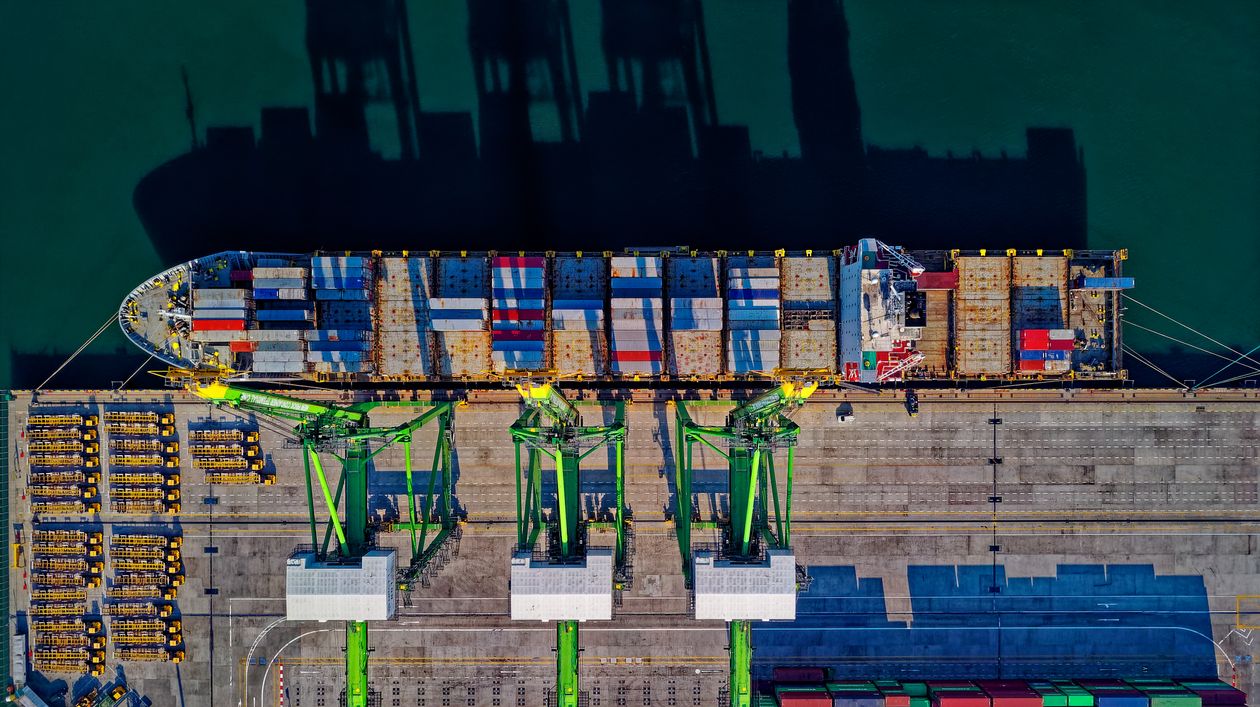
Illustrative image only: aerial view of a container port, not a FourKites installation or customer operation. Photo credit: Ollie Craig / Pexels. Original photo and source: https://www.pexels.com/photo/drone-shot-of-containers-on-the-port-7519250/ . License: https://www.pexels.com/license/ .

The Dataleo angle

An outcome-led supply chain platform must prove that automated actions improve the decision metric, not merely that more tasks are completed by AI agents. For OTIF or cost to serve, value requires a credible baseline, clear operational attribution and reliable execution across organizational boundaries. The central limitation is that suppliers, carriers, inventory policies and customer commitments can determine results outside the platform's control. FourKites' announcement is a meaningful shift in go-to-market positioning, but not yet evidence of a contractual transfer of outcome risk or realized financial gains.

FourKites official newsroom